Build Log — Full Sail University · CS Capstone · DANIEL VINCENT
Project Culper
A 5-month build-in-public log documenting the design and development of a multi-tenant intelligence aggregation platform. Weekly posts covering architecture decisions, NLP research, implementation notes, and honest retrospectives.
● Active
Feature Preview
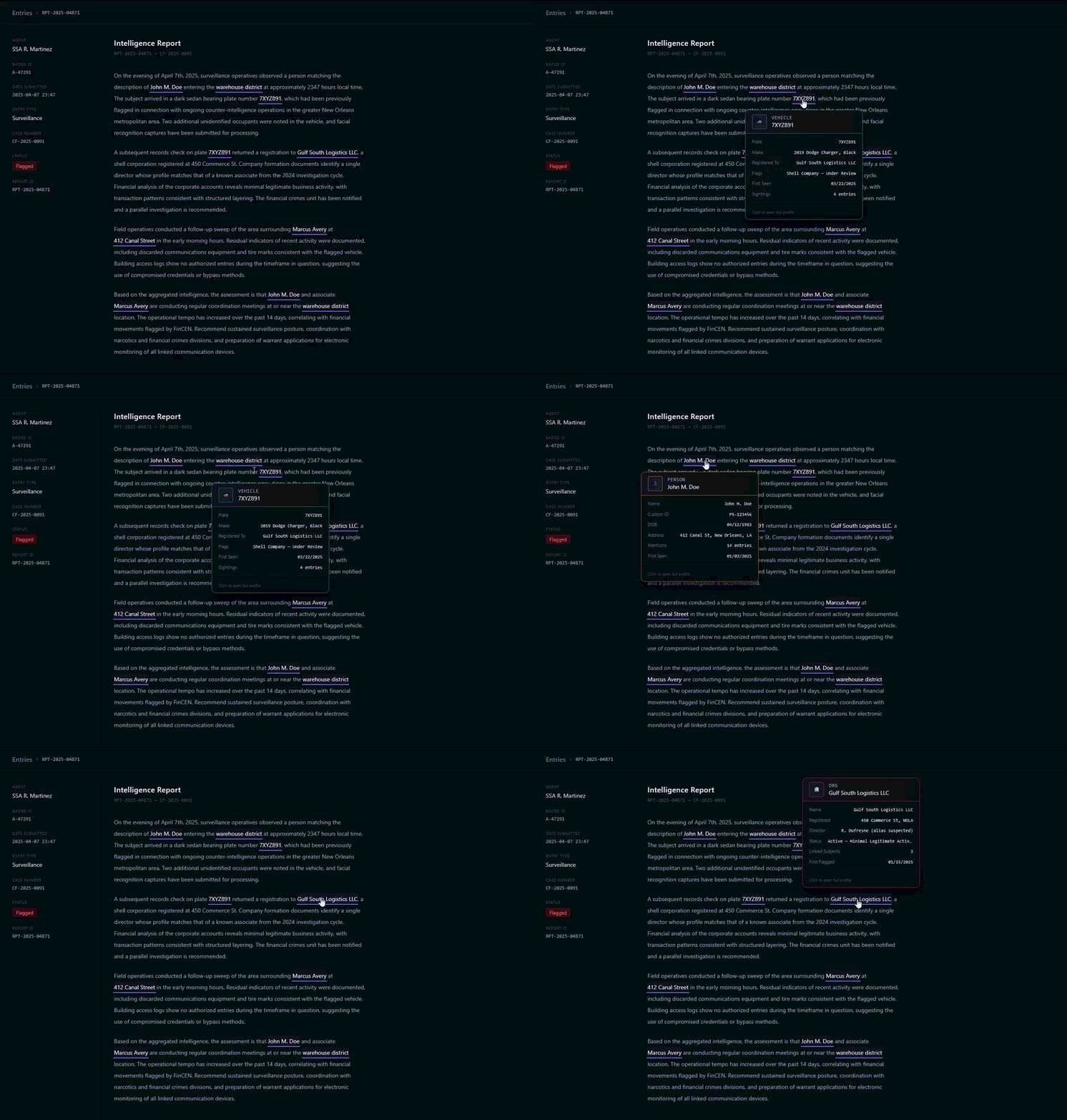
Named Entity Recognition
As an operator types a narrative entry, the system automatically detects and highlights named entities such as people, locations, vehicles, and organization in real time.
Hovering overing an entity surfaces a persistent tooltip with linked profile data pulled from across all entries in the system turning a text document into a live intelligence graph.
Latest Entry
-
Devblog 5.4
Read more: Devblog 5.4This week Zac and I focused on polishing a few UI pieces and the final presentation. It wasn’t until we had to cram everything into a 15-minute talk that we realized how much we had actually built. Things like the login, role management, and tenant creation wouldn’t make the cut simply for time alone. We…
All Posts
-
Read more: Devblog 5.3
Devblog 5.3
This week’s work in Project Culper split into two threads: fixing how categories are managed, and fixing how the whole app reads. The category settings page had a UX problem I kept running into myself. It defaulted straight into a “Create Category” form, so every time I opened it I had to back out before…
-
Read more: Devblog 5.2
Devblog 5.2
Rebuilding the Entry and Entity Modals in Project Culper I spent some time this week reworking how agents create and edit records in Project Culper, and the changes ended up touching more than I expected. The first problem was simple: the entry creation and edit modals felt cramped, and they were not sized consistently with…
-
Read more: Devblog 5.1
Devblog 5.1
This past week, I presented Culper to a team of 10 casino executives. They had tons of great questions and feedback and this month I will be focused on applying some of their requests that fit within the scope of the school project. Firstly, the Entry Page will be revamped and show a smaller version…
-
Read more: Devblog 4.4
Devblog 4.4
This week we focused on gathering user feedback for the current state of Project Culper. For the UI/UX, we received good suggestions and perspectives from our testers and have a clear path forward to making the product feel more complete and be more intuitive. We also received good feedback regarding the NER model and the…
-
Read more: Devblog 4.3
Devblog 4.3
This week we spent most of the time getting the staging version of the site live for testers. A test tenancy and 10 test accounts were created for this test run. A survey was provided for testers to fill out after testing and allows them to leave general feedback on existing features and features they…
-
Read more: Devblog 4.2
Devblog 4.2
I started by merging two feature branches, zac-dev and dan-dev, into staging. Along the way I hit a real merge conflict: both branches had touched the Dashboard page, one adding a floor plan editor, the other adding an entity linking panel. Rather than force them to coexist awkwardly, I moved the entity linking module into…
-
Read more: Devblog 4.1
Devblog 4.1
This week on Project Culper, I built out tenant invites: the piece we needed before we could start real multi-user testing. Up to now, the only way into a tenancy was the original signup flow, meaning every tester needed a separate workspace. That is not how the product will actually be used, so I added…
-
Read more: Devblog 3.4
Devblog 3.4
Teaching Culper to Learn: NER Training Is Live One of the core promises behind Project Culper is that the system should get smarter over time. Not just smarter in a general sense, but smarter about your organization’s intelligence data. This week, we shipped the feature that makes that possible: on-demand NER (Named Entity Recognition) training.…
-
Read more: Devblog 3.3
Devblog 3.3
Building the Knowledge Graph for Project Culper One of the big ideas behind Project Culper is that intelligence entries shouldn’t just sit in a list. Real field work is relational: a name shows up in one report, comes back in another, and over time starts painting a picture. The knowledge graph is how we actually…
-
Read more: Devblog 3.2
Devblog 3.2
Building a Retroactive Entity Linking Agent with FastAPI and spaCy One of the core challenges in any intelligence or research platform is connecting the dots between raw text and structured data. Names appear in entries, but unless those names are formally tied to known entities, they are just strings. A feature I recently shipped closes…

